The world’s most prestigious photojournalism contest has announced the 42 regional winners from six regions around the globe who submitted projects in three categories: Single Photographs, Stories, and Long Term Projects. The World Press Photo of the Year, chosen from among the regional winners, will be announced on April 23.
The winning works, selected from the submissions of 3,747 photographers participating in this edition, focus on some of the most pressing challenges facing the world today: politics, gender issues, migration, global conflicts, and the climate crisis. The latter has a global reach, as evidenced by the selected stories, which range from Los Angeles to the Philippines, and include Galicia, Spain. At the same time, the power of civic action and the defense of social rights is highlighted through images of protests in the United States and social movements led by women in Guatemala and Kenya.
Three Spaniard authors among the winners
Brais Lorenzo and the worst fires in Spain in the last three decades
Photojournalist Brais Lorenzo has won a 2026 World Press Photo award in the Stories category for Europe with “Burned Land,” a project on the forest fires in Galicia, produced for EFE, Revista 5W, and El País.
2025 was a record year for forest fires in Europe. More than 200,000 hectares burned in Galicia during the worst fire season in Spain in three decades. The increasingly severe fires in this region are attributed to drought and heat intensified by climate change, rural depopulation, and short-sighted forestry policies, including the widespread planting of highly flammable, non-native species.
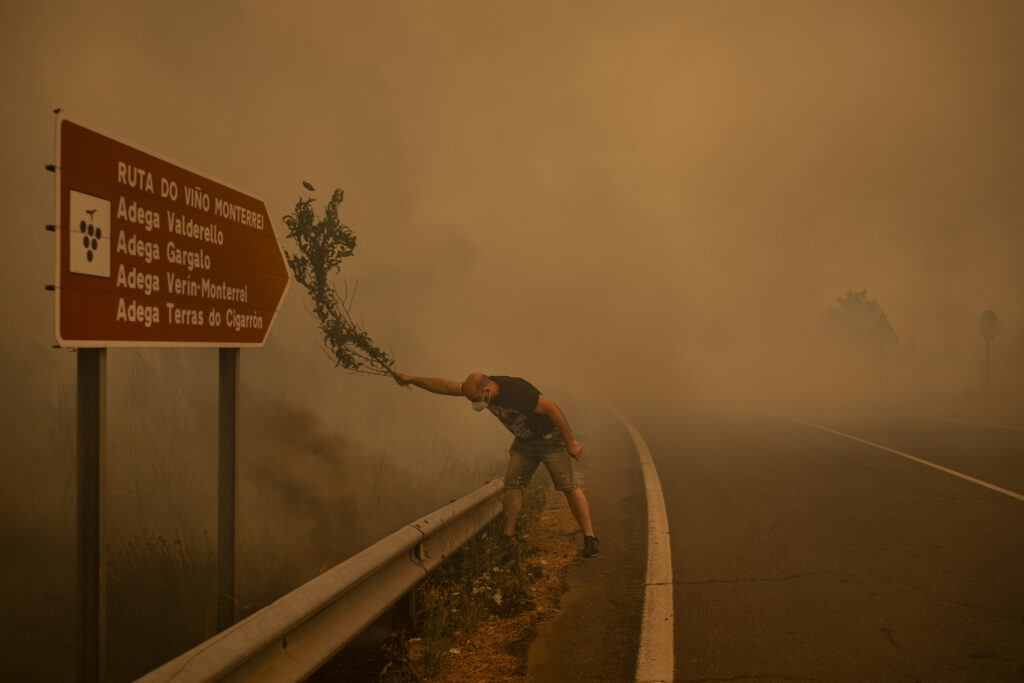
Born in Ourense, the photographer grew up with the smell of smoke every summer and has documented Galician forest fires since 2011, “the same year I started working as a photojournalist in Galicia,” Brais Lorenzo explains in a statement to the Photographic Foundation, of which he is a photographer member. He details that “the award-winning series corresponds to the 2025 fire wave, the worst fire wave in the history of my homeland, Galicia.”
Regarding the World Press Photo award, Lorenzo comments that “it is an honor to have received this recognition for work done in the land where I was born, which I love and which pains me to see burn every year due to a structural problem that, for the moment, has no apparent solution. Furthermore, I would like to dedicate the award to my father, who is no longer with us, and who is the reason I maintain my connection to my village, the same one where he was born. He is the one who instilled in me a love for nature and the rural environment.”
The “Burned Land” project seeks to convey the urgent need to address the causes of these fires. According to the photographer, “We have suffered the worst wave of fires in Galicia’s history, but practically nothing has changed. For me, the priority should be to keep people in rural areas, to return a bit to the way things were done before, to what was always done in Galician villages, to have people connect with the environment they live in. To have a mosaic landscape that acts as a natural firebreak. I think that’s the most important thing: to return to a more traditional, more sustainable way of life, taking advantage of the technical and technological advances we have today.”
Regarding the international exposure this project will gain thanks to the World Press Photo award, Lorenzo concludes: “I would like people, when they see the project, think in the importance of preserving the natural environment in which we live. In such an unstable world, with so many conflicts, this is a fundamental issue for ensuring human survival.”
Luis Tato and the student protests in Madagascar
Photojournalist Luis Tato has won a 2026 World Press Photo award in the Africa region’s Stories category for his work “Generation Z Protests in Madagascar,” about the student protests in Madagascar, for Agence France-Presse.
In September 2025, students took to the streets across Madagascar to protest the deterioration of public services, corruption, and economic hardship. When President Andry Rajoelina dissolved his government but refused to resign, the demonstrations intensified. On October 11, the CAPSAT military unit defected to join the protesters, despite being the same force that had brought Rajoelina to power in a 2009 coup. Days later, the military seized power, promising elections within two years. Following a pattern seen in Generation Z uprisings in Bangladesh, Nepal, and Bulgaria, Madagascar’s youth forced regime change but were excluded from shaping the subsequent political transition.
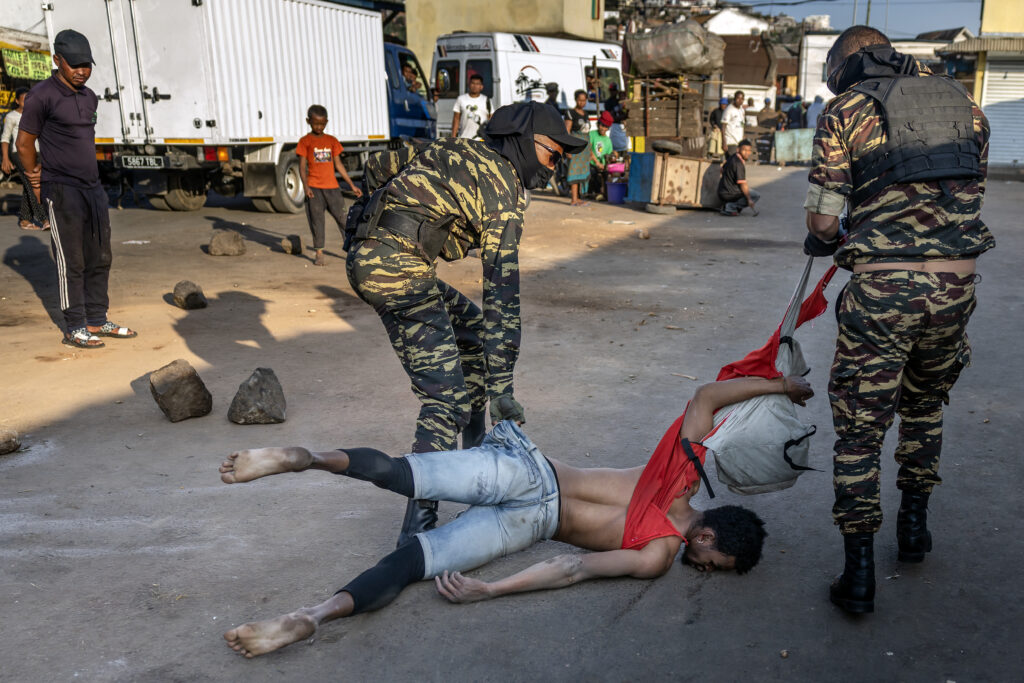
In a statement to the Photographic Foundation, Luis Tato explains this global social moment: “Young people have always played a role in social change because they look to the future with hope, know how to organize themselves, and are interested in actively participating in transforming their realities, often generating significant political changes. And it’s interesting to see how, in the last two or three years, a series of stories involving Generation Z, university students from different countries, have emerged internationally. They inspire and learn from each other to transform their political realities. I think we are living through a very interesting historical moment, and for me, as a photojournalist, it has been a privilege to have the opportunity to cover these stories in Madagascar, and previously in Kenya, perhaps with different results but with very similar stories of young people who wanted to shape their own future.”
This is the third time Tato has won a World Press Photo award: “I’m very happy. It still seems like a dream to me that there are people on the World Press Photo jury, or those of other awards, who believe my work deserves such recognition. For me, the recipe for this success, if we can call it that, is hard work. I believe that if you love and respect the profession and always try to give your coverage a unique touch, the recognition will eventually come. And obviously, it’s a privilege to gain visibility for my work and the stories I tell thanks to awards like this. Ultimately, that’s the goal: for the stories we tell to reach people, to bear witness, and to create a perspective of the world we live in through photography.”
Diego Ibarra Sánchez and how war deprives children of their right to education
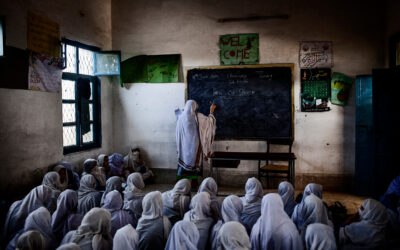
Photojournalist Diego Ibarra Sánchez has won a World Press Photo award in the Long-Term Project category for the West, Central, and South Asia region with “Hijacked Education,” a project carried out in nine countries about the deprivation of education for children living in war zones.
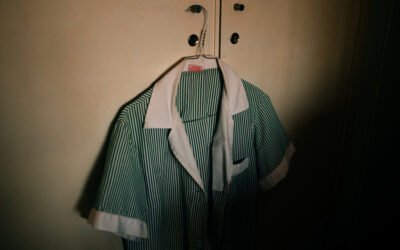
Around the world, war, extremism, and forced displacement deprive millions of children of their right to education. Destroyed schools, teachers killed or forced to flee, burned textbooks, and classrooms converted into barracks are all part of this reality. The UN estimates that 85 million of the 234 million school-age children affected by conflict worldwide have no access to education. The consequences extend far beyond the classroom, impacting physical, emotional, social, and cognitive development. Since 2011, the photographer—who is son of a teacher and father of an 11-year-old—has documented this crisis in nine countries, from West and South Asia to Europe and South America.
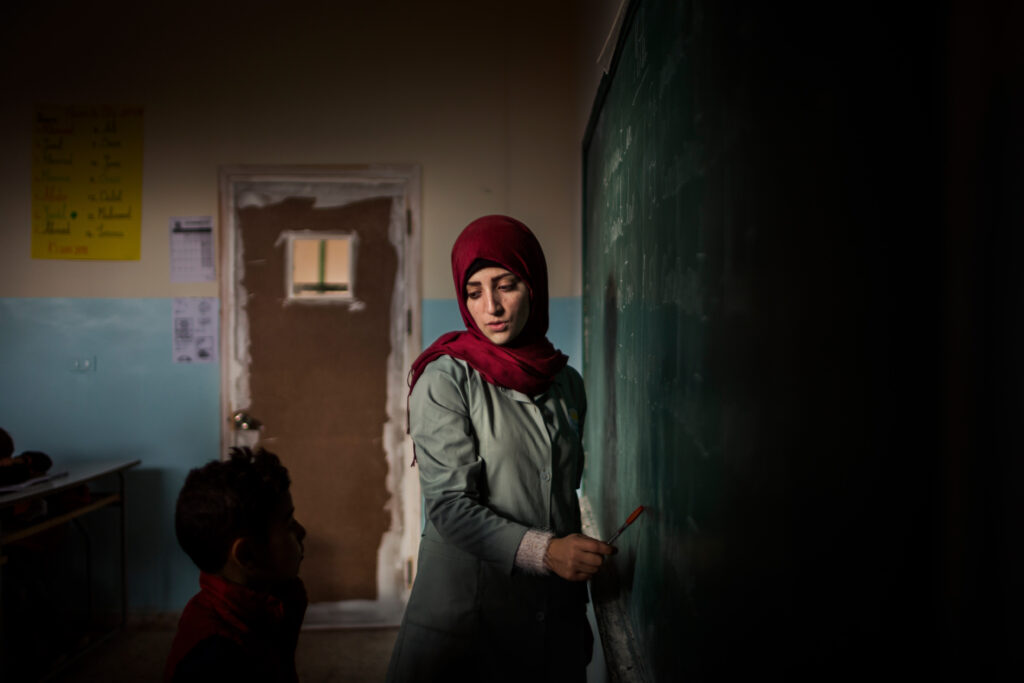
The photographer resides in Lebanon, currently ravaged by Israeli bombings, which he is covering on the front lines. However, Ibarra Sánchez was able to give a statement to the Photographic Foundation, explaining that he is “very excited to have been awarded the World Press Photo for my long-term project, Hijacked Education, which I began in 2011 in the Swat Valley in Pakistan, on my first visit there after Mullah FM, the Taliban leader who at that time ruled the valley with an iron fist, terrorizing it and attacking schools.”
The photographer explains that “it is a project to show the consequences of violence on children. To try to show that war doesn’t end with the last bullet, when the flag is raised, but that the consequences reverberate through time.” He adds that “this project has taken me all over the world: Pakistan, where I lived for five years, Afghanistan, Syria, Iraq, Ukraine, Colombia, Nagorno-Karabakh. It’s a journey that tries to pose questions rather than provide stereotypical answers; it invites us to think about how childhood should be a right and not a privilege, about the thousands of childhoods shattered and lost along the way. That in war there are only losers. And that children should not be robbed of their childhood.”
Silvia Omedes, member of the global jury of World Press Photo 2026
Silvia Omedes, director of the Photographic Social Vision Foundation, served on the global jury for World Press Photo 2026. Omedes was the president of the jury for the European region of the contest.
Regarding the winning projects, Omedes stated, “It’s not just about describing events or evoking emotions, although both are very important ingredients for photojournalism. The most insightful projects are those that also pose questions for us.”
She added, “There are no ‘small’ stories. Every backyard has a story to tell. And all those supposedly ‘small’ stories highlighted by the competition can be the inspiration someone in the world needs.”
Silvia Omedes concluded, “Every day we witness the power of these winning stories. When young people are given the necessary tools to truly understand and ‘read’ photographs, one realizes the enormous impact this annual selection of images has and its potential for visual education and understanding the world.”
The exhibition in Barcelona: guided tours and educational activities
The Barcelona exhibition featuring all the winning images will be open from November 6 to December 13. Tickets will go on sale in October through the website fundacionpsv.org.
After achieving a record attendance of 67,500 visitors last year, the Photographic Social Vision Foundation is organizing the World Press Photo 2026 exhibition in Barcelona for the twenty-second consecutive year. The exhibition will be held at the Centre de Cultura Contemporània de Barcelona (CCCB), which is co-producing the event, with the main collaboration of the Banco Sabadell Foundation.
Guided tours to understand current events
Las visitas comentadas diseñadas por el área de Acción Social y Educación Visual de la Fundación Photographic, llevan la experiencia más allá de la simple observación de las fotografías ganadoras, profundizando en las historias captadas, en el modo en que son mostradas y en la actualidad de la profesión fotoperiodística. Con el objetivo de hacer reflexionar al mayor número de personas acerca de los retos de la actualidad global, se presenta un extenso programa de visitas guiadas presenciales al público general -también en fines de semana-, a empresas -a puerta cerrada-, y a centros educativos.
The guided tours designed by the Social Action and Visual Education department of the Photographic Foundation take the experience beyond simply viewing the winning photographs, delving into the stories captured, how they are presented, and the current state of the photojournalistic profession. With the aim of encouraging reflection on the challenges of our current global landscape, an extensive program of in-person guided tours is offered to the general public (including weekends), to companies (private tours), and to educational institutions.